Computer Numerical Control (CNC) machining is one of the most trusted ways to create strong, accurate, and repeatable parts for almost every industry. From metal brackets in cars to tiny plastic housings in electronics, CNC parts support the modern world. People trust CNC parts because they are consistent, durable, and can be shaped into very complex designs.
In this article, we explore Types of CNC Parts in a simple, clear, and complete way. Whether you work in engineering, purchasing, manufacturing, or product design, this guide will help you understand the different kinds of CNC parts, how they are made, what materials are used, and how to choose the right part for your project.
1. Introduction to CNC Parts & Precision Manufacturing
CNC parts are components produced using automated computer-controlled machines. These machines follow coded instructions to cut, shape, drill, or mill raw materials into specific forms. CNC technology allows manufacturers to create parts with extreme precision—often within microns.
Why CNC Parts Matter
- They deliver stable quality.
- They work for both small and large production runs.
- They support industries like automotive, aerospace, medical, robotics, and consumer electronics.
- They allow advanced shapes that traditional manual machining cannot achieve.
Common CNC Operations Used for CNC Parts
| Operation | Purpose |
|---|---|
| CNC Milling | Complex shapes, pockets, and surfaces |
| CNC Turning | Round parts like shafts and pins |
| CNC Drilling | Accurate holes |
| CNC Grinding | Ultra-precise finishing |
| EDM | Complex cuts in hard metals |
Because CNC machining is flexible, there are hundreds of part types. The rest of this article explains them in a clear and structured way.
2. Classification of CNC Parts by Material Type
One of the most common ways to classify CNC parts is by the type of material used. Different materials offer different levels of strength, flexibility, temperature resistance, weight, and cost.
Main Material Categories
| Material Type | Examples | Key Advantages |
|---|---|---|
| Metals | Aluminum, Steel, Brass | Strength, conductivity, durability |
| Plastics | ABS, Nylon, PEEK | Lightweight, corrosion-free, low cost |
| Composites | Carbon Fiber, G10 | High strength-to-weight ratio |
Why Material Matters
- Determines the life cycle of the product
- Affects machining cost
- Impacts weight and performance
- Influences tolerance levels
Choosing the right material can reduce cost by up to 30% while improving product efficiency.
3. Machined Metal CNC Parts
Metal CNC parts are the strongest and most widely used across industries.
Popular Metal CNC Components
- Aluminum parts — lightweight, corrosion-resistant
- Stainless steel parts — strong, heat-resistant
- Brass parts — excellent machinability
- Steel parts — ideal for heavy load applications
- Copper parts — great electrical and thermal performance
Common Examples
- Motor housings
- Brackets and supports
- Gear parts
- Heat sinks
- Valves and manifolds
Industries Using Metal CNC Parts
- Aerospace
- Automotive
- Defense
- Machinery manufacturing
- Electronics
Metal CNC parts are preferred when strength, stability, or high temperature performance is required.
4. CNC Plastic Components & Their Applications
Plastic CNC parts are popular because they are lightweight, affordable, and resistant to chemicals.
Common Plastic CNC Materials
- ABS
- Polycarbonate
- Nylon
- PVC
- PEEK
- Acrylic
Why Plastics Are Used
- Lower cost
- No corrosion
- Good electrical insulation
- Easy to color and customize
- Light weight makes transportation cheaper
Plastic CNC parts appear in medical devices, consumer electronics, and automotive interiors.
5. CNC Structural Parts vs. Functional Parts
Not all CNC parts serve the same purpose.
Structural CNC Parts
These parts carry loads or act as the main skeleton of a product.
Examples:
- Frames
- Brackets
- Support blocks
- Mounting plates
Functional CNC Parts
These parts perform movement or control functions.
Examples:
- Gears
- Shafts
- Bushings
- Fluid manifolds
- Mechanical joints
Understanding this difference helps designers choose the right materials and tolerances.
6. Turning, Milling, & Multi-Axis CNC Parts
CNC parts can also be classified based on how they are made.
Types of Machined Parts
- Turned parts — round, smooth, perfect for shafts
- Milled parts — flat surfaces, pockets, and edges
- 4-axis & 5-axis parts — complex 3D geometry
Examples
| CNC Method | Typical Part Produced |
|---|---|
| Turning | Bolts, pins, rollers |
| Milling | Covers, plates, housings |
| Multi-Axis | Aerospace brackets, turbine parts |
Multi-axis CNC machining allows for extremely complex shapes used in high-precision sectors.
7. Common CNC Parts Used in Industrial Equipment
Many industrial machines use CNC parts for accuracy and durability.
Frequently Used CNC Components
- Shafts
- Gears
- Housings
- Sleeves
- Bushings
- Flanges
- Joints
- Pistons
- Valves
- Spacers
These parts must be strong and well-finished to ensure safety and long service life.
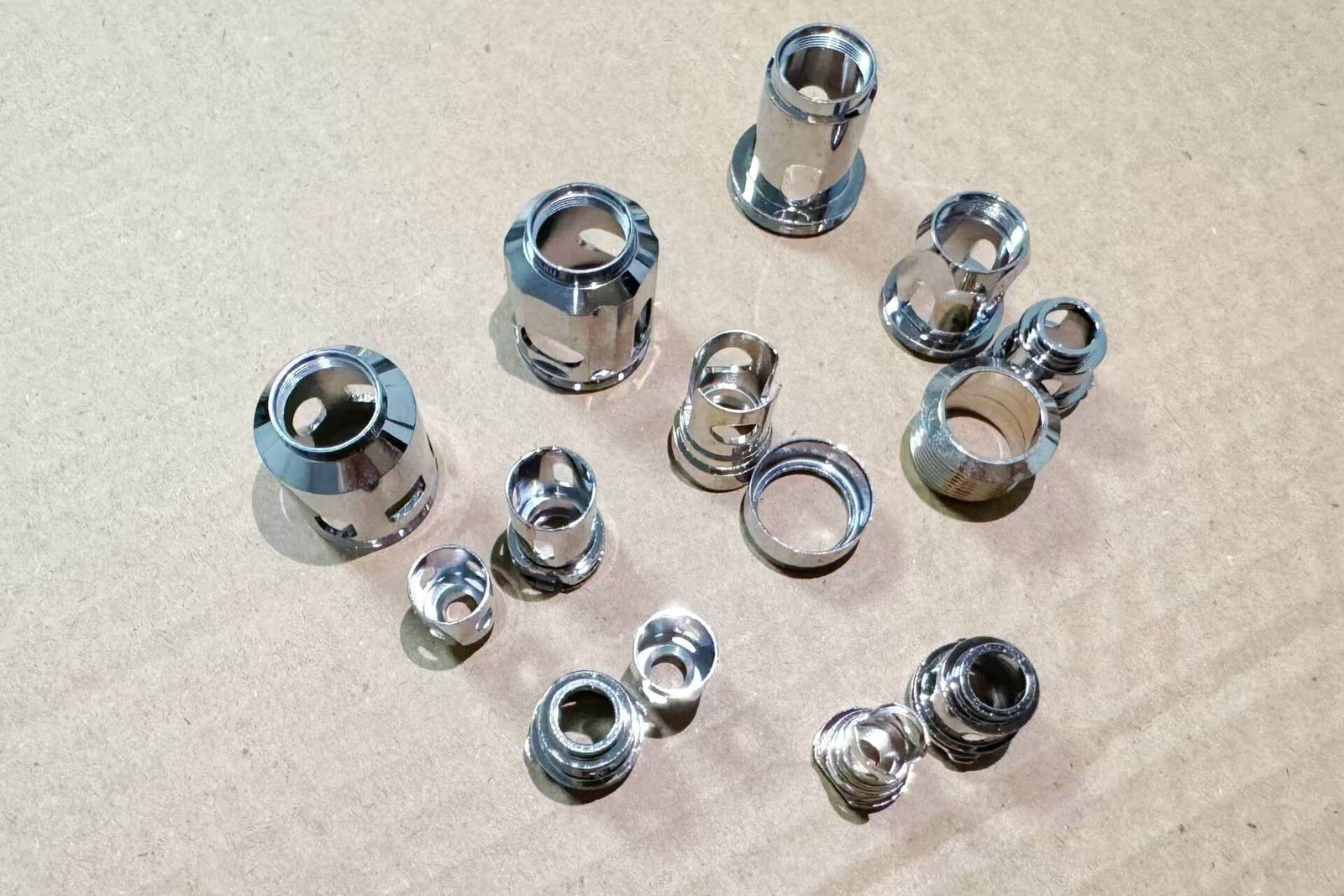
8. Surface-Finished CNC Parts
After machining, many CNC parts receive extra finishing to improve appearance and durability.
Popular Surface Finishes
- Anodizing
- Powder coating
- Polishing
- Sandblasting
- Chrome plating
- Nickel plating
Why Finishing Matters
- Protects against corrosion
- Enhances appearance
- Improves wear resistance
- Adds color options
- Increases product value
Even a simple anodized finish can increase a part’s lifetime by 40%.
9. CNC Parts for Electronics, Automotive, Aerospace
Different industries need different CNC parts.
Electronics
- Heat sinks
- Enclosures
- Connectors
Automotive
- Engine brackets
- Transmission parts
- Suspension components
Aerospace
- Turbine components
- Structural brackets
- Lightweight housings
Each industry demands strict tolerances and high reliability.
10. Choosing the Right CNC Part for Your Project
When selecting CNC parts, consider:
Key Factors
- Material suitability
- Load and structural needs
- Tolerance levels
- Environmental conditions
- Surface finish
- Cost and production volume
A careful choice can reduce risk and increase product success.
11. Types of CNC Parts (Main Section)
The world of CNC parts includes hundreds of individual components. At the core, the most common Types of CNC Parts include:
| Category | Examples |
|---|---|
| Structural Parts | Frames, Brackets, Bases |
| Rotational Parts | Shafts, Rollers, Pins |
| Motion-Control Parts | Gears, Bushings, Bearings |
| Housing Parts | Covers, Cases, Enclosures |
| Fluid Control Parts | Valves, Manifolds |
| Decorative Parts | Panels, Knobs, Custom Designs |
This classification helps engineers and buyers choose exactly what they need for their application.
12. 10 Tips for Types of CNC Parts
- Choose materials based on the environment (heat, load, corrosion).
- Use aluminum when you need a balance between cost and strength.
- Select plastics for lightweight or chemical-resistant designs.
- Consider surface finish early in the design stage.
- For round parts, use turning instead of milling for cost savings.
- Use 5-axis CNC for highly complex shapes.
- Always request tolerance charts from your manufacturer.
- Test prototypes before final production.
- Use standard thread sizes to reduce cost.
- Work only with certified CNC factories for reliable output.
FAQs
1. What are CNC parts used for?
CNC parts are used in machines, vehicles, electronics, medical tools, and almost all modern products that require precision.
2. Which material is best for CNC parts?
There is no “best” material—it depends on your needs. Aluminum is popular because it is strong yet light. Plastics are good for electrical parts.
3. How accurate are CNC parts?
Most CNC machines can achieve tolerances within ±0.01 mm, depending on the material and design.
4. Are CNC parts expensive?
Cost depends on material, size, tolerance, and volume. Larger batches cost less per part.
5. What finish should I choose for CNC parts?
Choose anodizing for aluminum, plating for steel, and polishing for decorative items.
6. Can CNC machines make complex shapes?
Yes, multi-axis CNC machines can make very complex 3D designs.
7. Are CNC plastic parts strong enough?
Yes, many plastics like PEEK and Nylon are extremely durable and used in medical and industrial products.
8. What industries use CNC parts most?
Automotive, aerospace, medical, electronics, robotics, and manufacturing.
9. How long do CNC parts last?
With proper material and finishing, CNC parts can last for years or even decades.
10. Can CNC parts be customized?
Yes, CNC machining is ideal for customization and small-batch production.
Conclusion
CNC parts are essential building blocks of modern products and industries. Understanding the Types of CNC Parts helps engineers, buyers, and manufacturers choose the right components for their needs. Whether you are designing electronics, machinery, or automotive products, CNC parts offer reliability, precision, and high performance. By using the right materials, finishes, and machining methods, you can create parts that are strong, efficient, and made to last.